There are many rare diseases - but how many?
To date, there is no reliable data on how many people in Germany are affected by rare diseases. Research and medical care are proceeding “in the dark,” which makes it extremely difficult to develop evidence-based treatments and new therapies. The National Registry for Rare Diseases (NARSE) fills this gap.
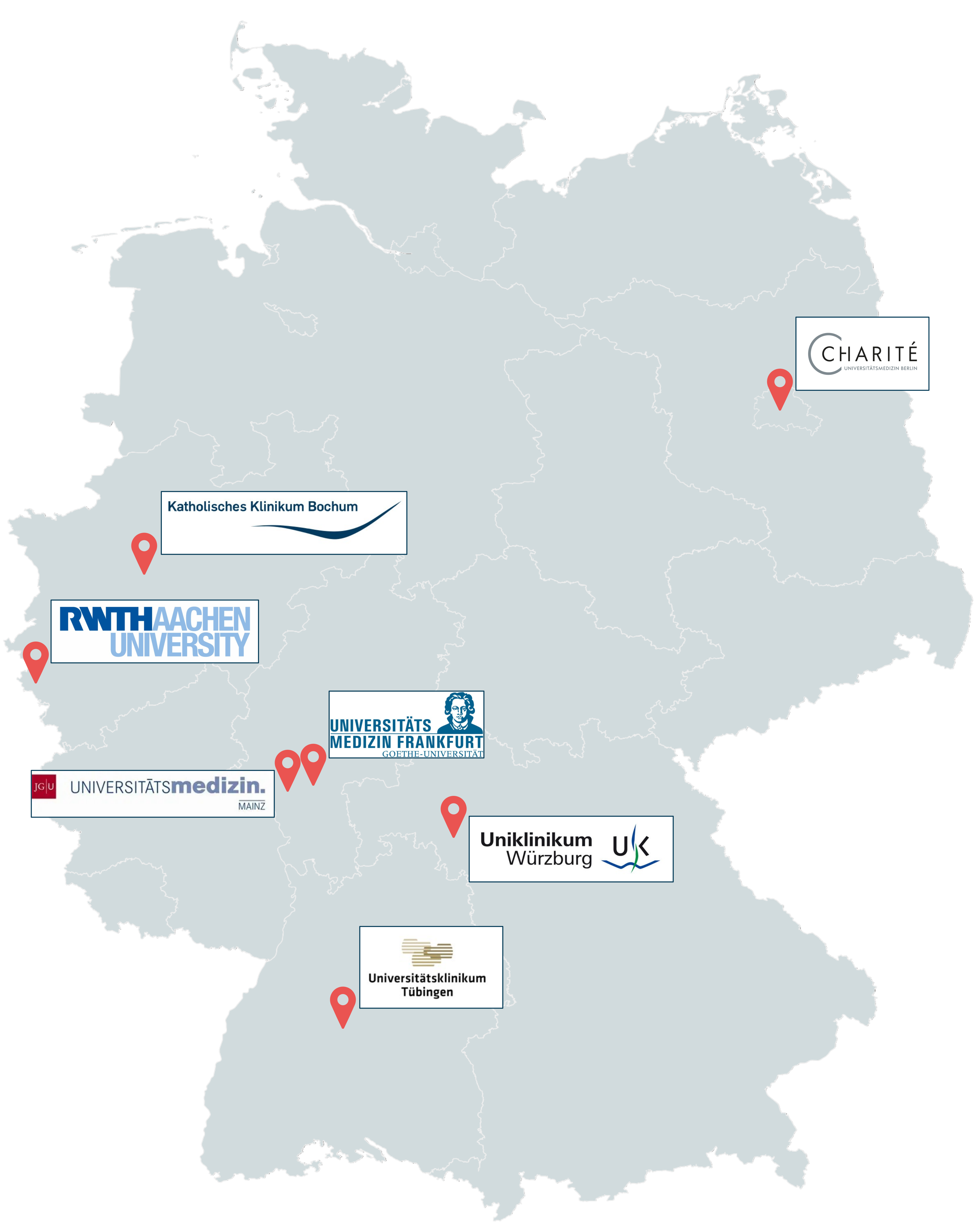
The NARSE aims to register all patients in Germany who have been diagnosed with a rare disease (prevalence less than 1:2,000) or an ultra-rare disease (prevalence less than 1:50,000). Registration is carried out by the treating physicians on a consent-based basis.
Sharing data is essential for medical progress—and this is especially true for people with rare diseases. Please help by registering now as a participating physician, or, if you are a patient, ask your physician to participate.
Click here to register as a physician.
NARSE operates in compliance with data protection regulations and follows standardized principles. This enables the sharing of data at the European and international levels, as well as with hospital information systems that adhere to the FAIR principles. FAIR stands for Findable, Accessible, Interoperable, and Reusable.
Entering fewer than 40 data elements is straightforward. As an epidemiological registry, NARSE can become an important anchor for future disease-specific research registries and other databases.
The registry was initiated by the think tank of the Eva Luise und Horst Köhler Stiftung for people with rare diseases and implemented by the Berlin Institute of Health at Charité in collaboration with the Institut für Medizininformatik der Goethe-Universität Frankfurt. It is operated by the Berlin Institute of Health at Charité - Universitätsmedizin Berlin.